Choosing the right logistics service provider first means understanding how much of your supply chain you want to hand over. Indeed, the terms 1PL, 2PL, 3PL, and 4PL describe four levels of outsourcing. These range from simple transport to full strategic logistics management.
Also, as a company’s needs evolve, the right level of support can change too. Below, Astr’in breaks down these four categories to help you choose the formula best suited to your business.
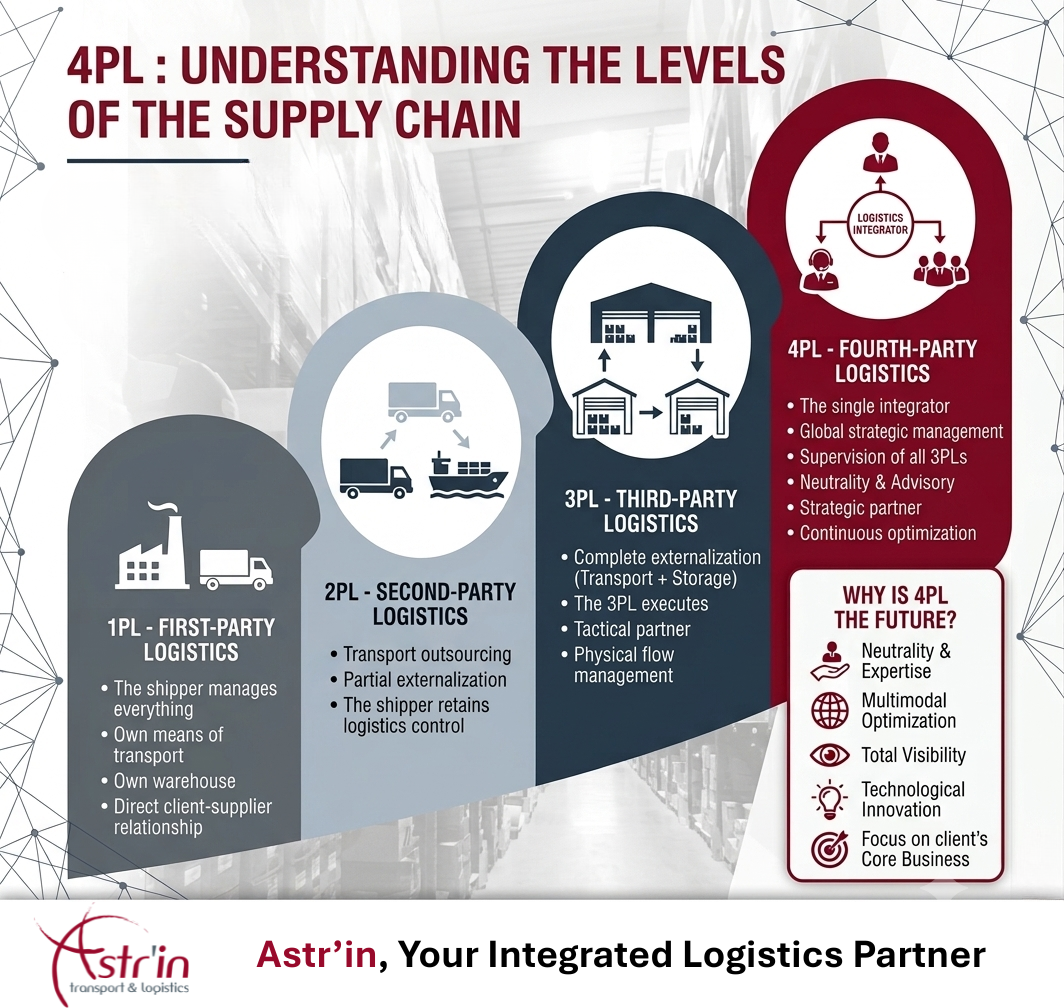
Why Distinguish Between Logistics Service Provider Levels?
Above all, a high-performing supply chain relies on rigorous organisation. Indeed, this runs from production through to final delivery. As a result, many companies turn to a specialised logistics service provider, rather than managing every operation in-house.
Indeed, the goal is simple: cut costs, gain flexibility, and refocus on core business activities.
However, providers offer very different levels of service. For example, some only handle basic transport. Others, meanwhile, manage full logistics operations. Therefore, the 1PL, 2PL, 3PL, and 4PL classification exists to clarify these levels of involvement.
1PL: The First Level of Logistics Outsourcing
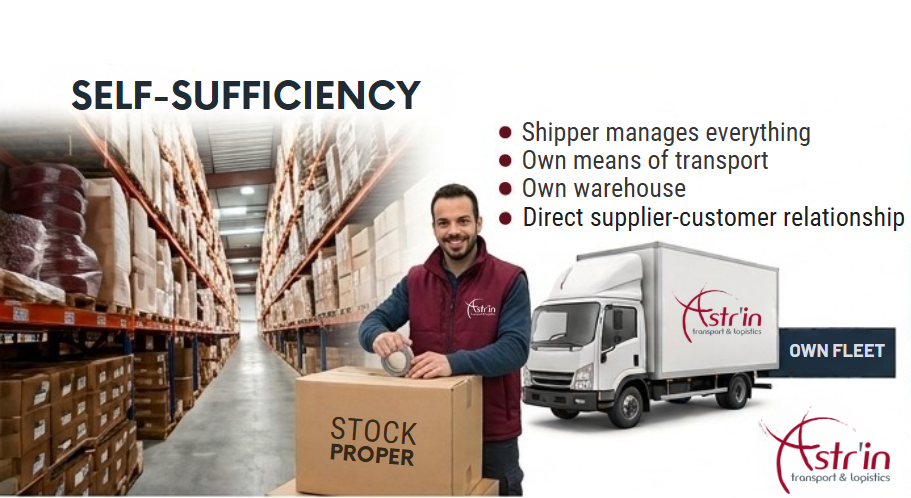
First, 1PL, or “First Party Logistics,” is the most basic level of outsourcing. In practice, it is usually limited to loading and transporting goods. Typically, this happens at national level.
Therefore, this option suits companies for whom transport is not a strategic activity. In short, they simply want to delegate delivery, without needing a global logistics solution.
2PL: Adding Storage and Warehousing
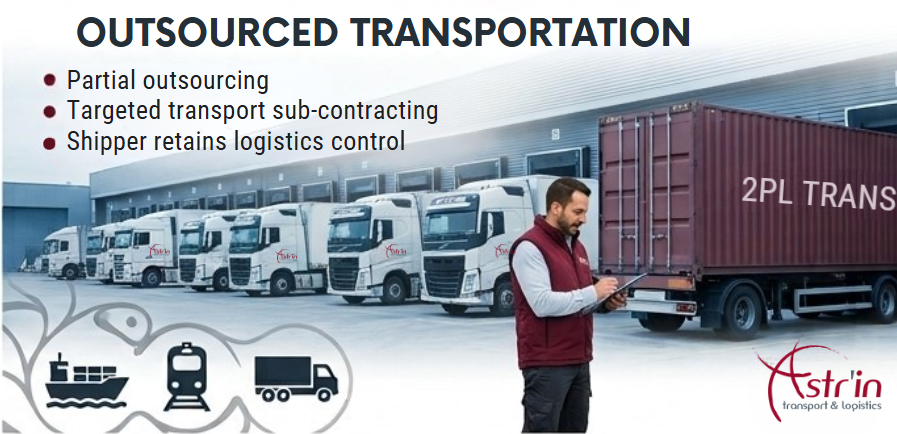
Next, 2PL, or “Second Party Logistics,” goes a step further than transport alone. In addition to delivery, the provider also offers storage and warehousing solutions. Through this added layer, the company gains more flexibility in managing its flows. Even so, the full supply chain is not yet covered.
3PL: Broader Supply Chain Management
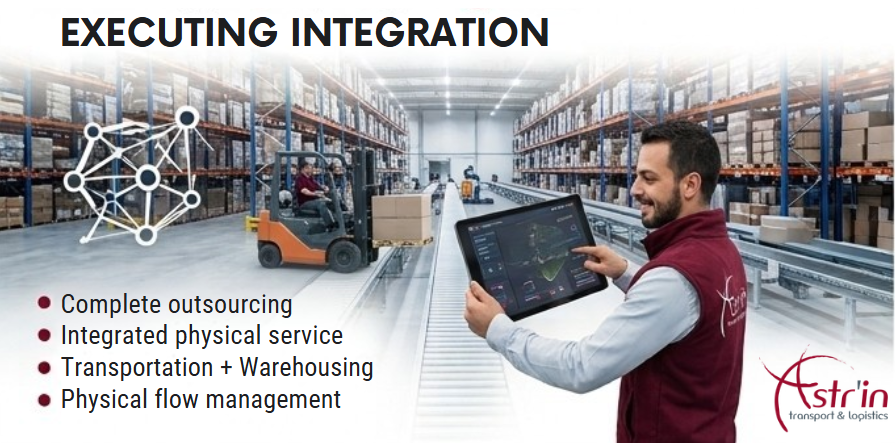
Then, with 3PL, or “Third Party Logistics,” the logistics service provider takes on a much larger share of the supply chain. Specifically, this includes transport, warehousing, and inventory management. In addition, it also covers customs support and regular operational tracking.
As part of this deeper involvement, 3PL contracts are generally long-term. This is because the range of services requires close, ongoing collaboration. As a result, this solution suits companies without in-house logistics expertise that want to focus on their core business.
4PL: Complete Strategic Logistics Management
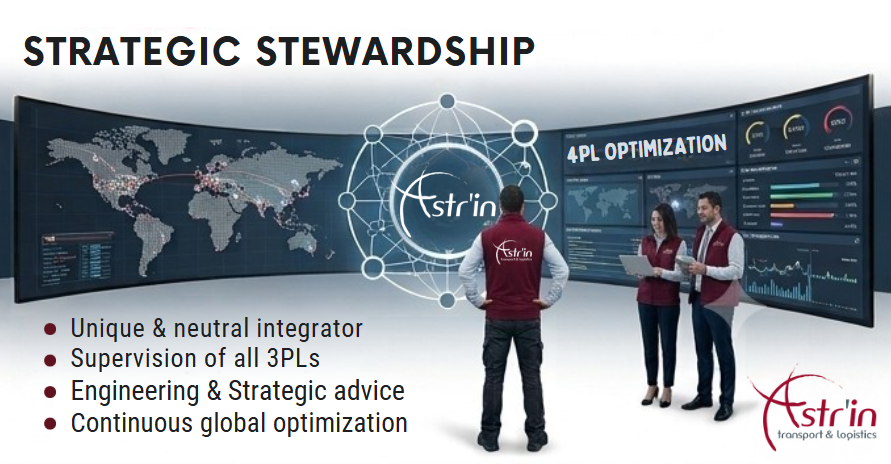
Ultimately, choosing between 1PL, 2PL, 3PL, or 4PL depends on your logistics maturity. It also depends on the complexity of your flows. For example, a small business looking to delegate transport will likely opt for a 1PL or 2PL solution. Conversely, a company wanting to outsource its entire supply chain will turn to a 3PL, or even a 4PL, logistics service provider for complete strategic management.
Which Logistics Service Provider Level Should You Choose?
Ultimately, choosing between 1PL, 2PL, 3PL, or 4PL depends on your logistics maturity and the complexity of your flows. For example, a small business simply looking to delegate transport will likely opt for a 1PL or 2PL solution. Conversely, a company wanting to outsource its entire supply chain will turn to a 3PL, or even 4PL, logistics service provider for complete strategic management.
Astr’in étudient avec vous vos besoins et vous accompagnent dans la mise en place d’une solution de transport et de logistique sur-mesure.