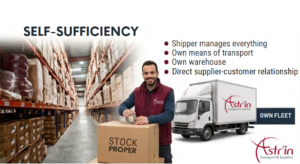
Outsourcing your logistics is a structural decision.
It frees up capital, reduces fixed costs and lets you focus on your core business, but only if you choose the right partner.
Here are the criteria that truly matter, beyond the sales brochures.
Why Outsource Your Logistics?
Managing a warehouse in-house represents a heavy investment and significant constraints: real estate, equipment, recruitment, training, management, regulation (ICPE, fire safety, security, etc.).
For an industrial or commercial SME, these constraints can consume a disproportionate amount of energy relative to the core business.
Outsourcing transforms fixed costs (rent, warehouse payroll, equipment depreciation) into variable costs directly tied to your activity. This is particularly relevant if your business is seasonal or experiencing rapid growth.
However, outsourcing is not without risks when the provider is poorly chosen:
- loss of visibility over your stock
- order picking errors
- missed deadlines
- opaque invoicing
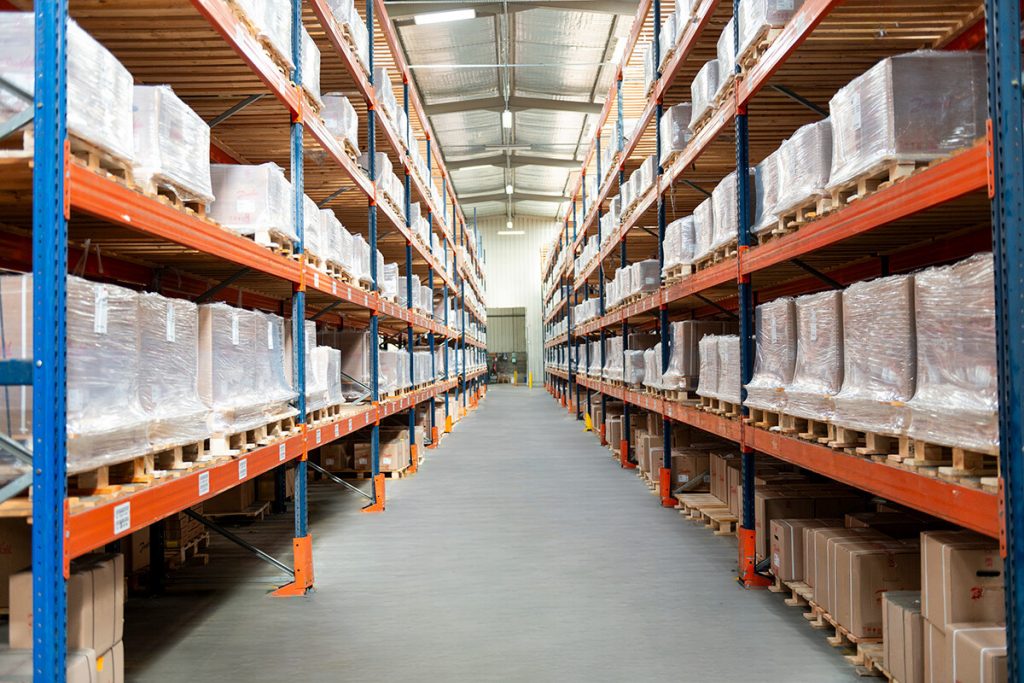
Warehouse Space and Capacity
1. Warehouse Space and Capacity
Astr’in makes available 320,000 m² spread across multiple sites in France.
This capacity allows projects of all sizes to be accommodated, from the SME outsourcing its first pallets to the large industrial account entrusting its entire goods flow.
Beyond gross square footage, look at: clear internal height (which determines real volumetric storage capacity), racking type (selective racking, block stacking, floor storage, high-bay), available handling equipment, and the ability to allocate a dedicated space if needed.
Astr’in offers dedicated or multi-client warehouses to suit your requirements: a shared cell with other customers can be a cost-effective solution for moderate volumes.
2. Certifications and Regulatory Compliance
A warehouse is not simply a building where pallets are placed. Depending on what you store, ICPE (Installations Classified for Environmental Protection) regulations impose strict obligations. A non-compliant provider exposes you to major legal and operational risks.
Certifications to check according to your activity:
- ISO 9001: Quality management — guarantees reliable, traceable order preparation processes.
- ISO 14001: Environmental management — important if your products have potential environmental impact.
- MASE: On-site safety for operators.
- OEA (Authorised Economic Operator): Essential for import/export flows.
- EcoVadis: CSR commitment — Astr’in’s engagement is certified and audited by EcoVadis.
- ICPE: Depending on the nature of your products (flammable, toxic, corrosive), your provider must hold the appropriate authorisations.
Astr’in notably operates a 24,000 m² logistics platform classified as high-threshold SEVESO in Saint-Vulbas, the highest classification for hazardous products.
Built in 2018, this facility includes a complete fire detection and suppression system, NFPA-standard sprinkler network with a 1,300 m³ water reserve, storage cells separated by 4-hour fire walls, and a containment basin.
3. Two Logistics Models: At Your Premises or at Ours
A good logistics provider does not impose a single model on you.
Two approaches exist, and each addresses different situations:
Outsourced logistics at the provider's warehouse
You store your goods in Astr’in’s warehouses.
This is the most common solution. It fully frees you from property-related constraints, and you benefit from existing infrastructure, equipment and teams.
Ideal if your activity does not justify a dedicated warehouse or if you want to reduce your fixed costs.
On-site logistics (at your premises)
Astr’in deploys and manages teams directly in your own facilities.
You retain physical control of your warehouse, while benefiting from Astr’in’s logistics expertise, tools and management.
Ideal if you already have a warehouse but operational management is consuming too much of your energy, or if your industrial process requires an on-site presence.
4. The WMS: The Backbone of Your Stock
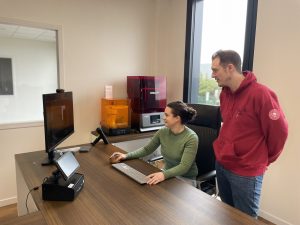
A WMS (Warehouse Management System) is the software that manages incoming and outgoing goods, locations and stock movements in real time.
Without a high-performance WMS, there is no reliable traceability, no accurate stock reconciliation, no possible integration with your own ERP and no KPIs.
Astr’in has an integrated WMS supported by an in-house IT team capable of carrying out custom developments. This is an important point: some providers impose their own tool with no possibility of interfacing with your system.
Check that the provider can interface with your ERP (SAP, Oracle, Sage, etc.) or your e-commerce platform.
5. Flexibility to Handle Activity Variations
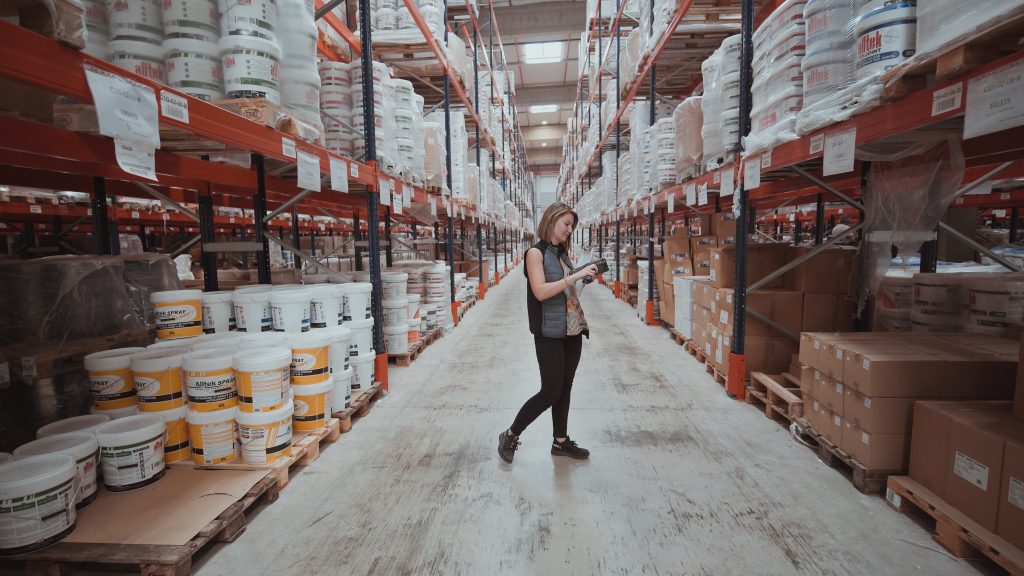
Outsourced logistics is only valuable if it adapts to your peaks in activity. A provider who applies the same fixed rate during slow and busy periods offers you no real added value.
Astr’in manages clients in highly seasonal sectors: e-commerce (year-end peaks), household appliances, mass retail.
This experience translates into a genuine capacity to absorb volume fluctuations without degrading service quality.
6. Value Added Beyond Simple Storage
The best logistics providers do more than simply store and ship. They add value to your products before or after storage. These are known as Value-Added Logistics (VAL) operations.
Astr’in offers in particular:
- Assembly and co-manufacturing: component grouping, kitting, finished product assembly.
- Postponement: product customisation as close as possible to the customer order, to reduce finished goods stock.
- Cross-docking: immediate re-dispatch without put-away, ideal for lean flows.
- Industrial sub-contracting: light transformation operations on your products, repackaging.
Specialist household appliance management: unloading, stock management, preparation and distribution for white goods — an Astr’in expertise recognised by leading sector players.